Extraction
At the gates of Boffa, AGB2A-GIC works some of the most promising bauxite deposits in Guinea. Open-pit extraction, controlled at every stage, serving one ambition: making Guinean bauxite a lever of sovereignty.
A world-class operation
Located in the strategic areas of Boffa, our bauxite deposits stand out for their high alumina content. Thanks to optimised open-pit extraction methods and a modern mining fleet, AGB2A-GIC guarantees a steady, high-quality supply, entirely destined for export to the world's aluminium markets.
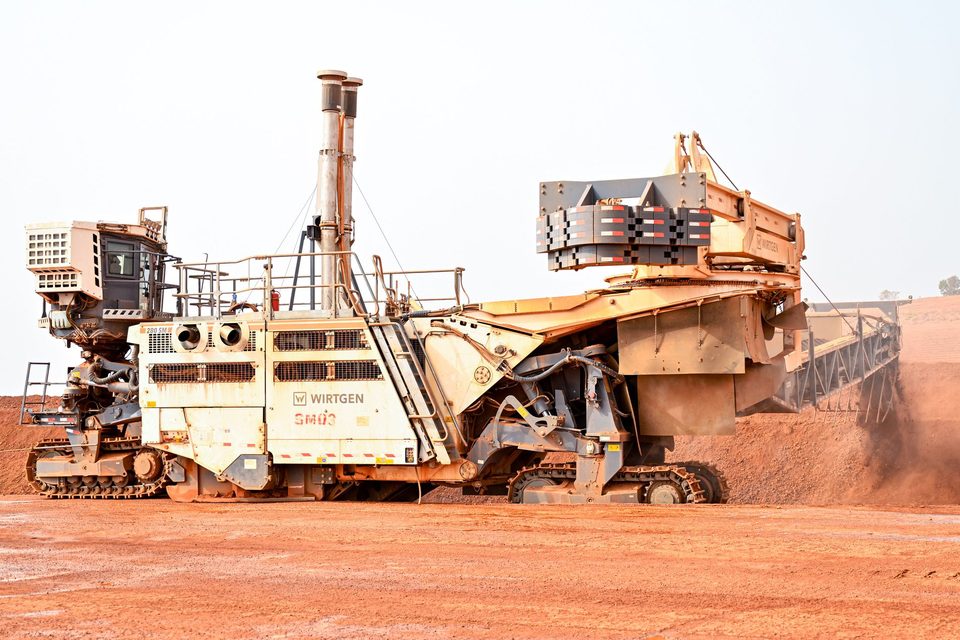
On every plateau, the day begins before sunrise. The teams take up position, the Surface Miners are inspected, and stripping resumes where it left off the day before: layer after layer, barely a few metres below the surface, the bauxite comes into view, dense and reddish — the signature of one of the richest soils in the world.
One of the richest belts in the world
AGB2A-GIC's perimeter covers 221 km², between the sub-prefectures of Lisso and Tamita (Boffa) and Tormelin (Fria). It lies within the Boké-Télimélé bauxite belt, a region that is home to some of the largest bauxite deposits in the world. The drilling campaigns carried out by AGB2A-GIC, GIC and Yellow River have identified numerous bauxite anomaly zones on the Koniakhouré, MangaSanga, Mouraya, Binton, Missira and Wenkhory plateaus.
From stripping to loading, a controlled sequence
The process always follows the same logic, plateau after plateau. The soil is first stripped to expose the bauxite layer. The Surface Miner then goes to work: its cutting drum wins the ore in regular strips and sizes it directly, with no use of explosives. Excavators and loaders then pick up the cut ore to fill our 80-tonne trucks, which head for the crushing stations before taking the road to the Port of Kokaya.
A fleet to match our ambitions
5 Surface Miners
A precision mechanical cutting technique, producing ore that is sized as it is won.
209 eighty-tonne trucks
The core of our transport fleet, between the extraction plateaus and the Port of Kokaya.
8 seventy-tonne excavators
Complemented by 15 loaders, for rapid pick-up of the cut ore.
2 crushing stations
Each with a capacity of 500 tonnes per hour, to size the ore before transport.
Extraction supervised at every stage
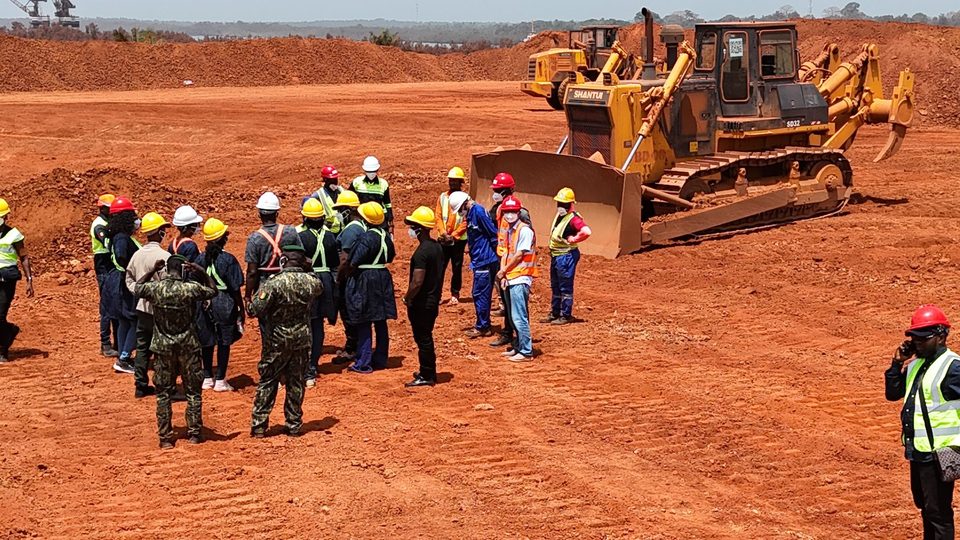
Before every shift, the teams attend a safety briefing. The access tracks are watered regularly to limit dust emissions, and every loaded truck is weighed on leaving the plateau and again on arriving at the port terminal, guaranteeing the traceability of the ore from the first link in the chain to the last.
Briefing before every shift
No team starts work without a safety point.
Watered tracks
Regular watering of the access roads limits dust emissions.
Weighed on departure and on arrival
Every truck is weighed on the plateau, then at the terminal.
The other stages of our chain
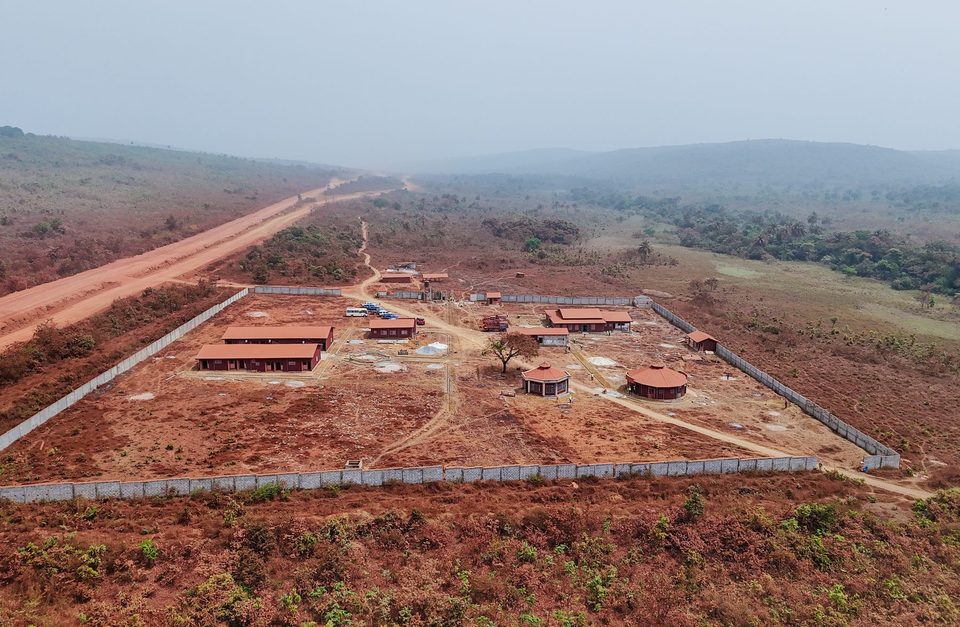
The Logistics Corridor
Three dedicated mining roads, travelled by 209 eighty-tonne trucks.
Learn more